Frequently asked questions❤
Lab Grown Diamonds
How are lab grown diamonds made?
Lab grown diamonds are produced in highly controlled environments that replicate the conditions which create natural diamonds. There are two methods used to create lab diamonds; CVD (Chemical Vapour Deposition) and HPHT (High Pressure High Temperature). Both methods are effective in creating high-quality, authentic diamonds, identical to those that have been traditionally mined.
Do lab grown diamonds look and shine like natural diamonds?
Yes. Lab grown diamonds look and shine exactly like natural diamonds, including their ability to reflect light and sparkle! The shine and brilliance of a diamond are determined by the four Cs, cut, colour, clarity, and carat, all elements that apply to both lab grown and natural diamonds. This means that lab grown diamonds can be made inall of the same colour and look combinations as their natural counterparts. In fact, if you were to put one lab grown and one natural stone of the samespecification next to each other, it would be impossible to tell the difference between them without specialist equipment.
Will lab created diamonds test as real diamonds?
Yes! As lab grown diamonds have the same chemical structure as natural, mined diamonds (carbon), lab grown diamonds are real diamonds and so will pass a diamond tester.
What are lab grown diamonds?
Lab grown diamonds are diamonds that have been created in a laboratory using advanced technological processes that mimic the conditionsrequired for natural diamond formation. The diamonds created in this way have exactly the same chemical and physical properties as natural diamonds.
Are lab grown diamonds made of the same material as natural diamonds?
Yes. Lab grown diamonds are made of carbon in a crystalline form, however instead of developing in a natural geological setting over thousands of years, they are made in a matter of weeks through controlled technological processes in a laboratory.
Can you tell the difference between lab grown and natural diamonds with the naked eye?
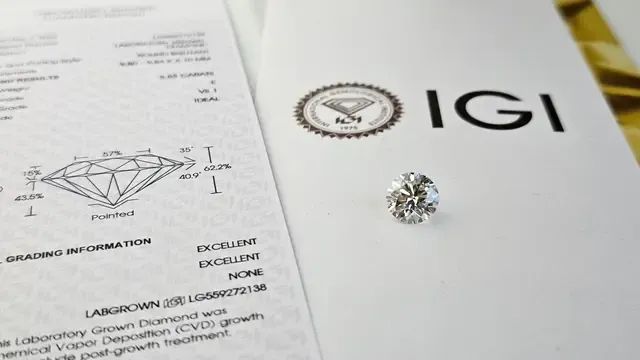
No, you can only tell the difference between lab grown and natural diamonds by viewing the laser inscription on the girdle using a magnifying glass loupe. Although not all diamonds come with this, which is why it is important to choose a diamond from a trusted and experienced jeweller, as it will come with an IGI or GIA certificate. The only other way to tell the difference between lab grown and natural diamonds is by using specialist gemological equipment.
What is the production time of a lab grown diamond?
The time it takes to produce a lab grown diamond can vary depending on the size and quality of stone desired. Typically, it takes from two to four weeks for a lab grown diamond to form. After the initial growth process of the rough diamond, it must then be cut and polished. The timeline for this can vary depending on its size and complexity.
Where are LG.D’s lab grown diamonds made?
Lab grown diamonds are made in highly specialized laboratories where expert scientists and engineers operate cutting edge technology. LG.D partners with trusted suppliers all over the world in order to source the highest quality lab grown diamonds. Some of our partners are located in Israel, the United States, and India, however this list is always changing as we look to add to our list of highly reputable laboratories.
Are lab grown diamonds as durable as natural diamonds?
The physical and chemical properties of lab grown diamonds are identical to that of natural diamonds, making them every bit as strong. They may even be stronger, as they are not subject to the same natural flaws that can weaken the integrity of natural diamonds.
Lab grown diamonds can be subjected to much the same pressures as their traditional counterparts and are extremely resistant to damage. Natural and lab grown diamonds both sit at 10 on the Mohs hardness scale, which means they are the toughest mineral in the world. In fact, they are so durable that they can only be scratched by another diamond.